
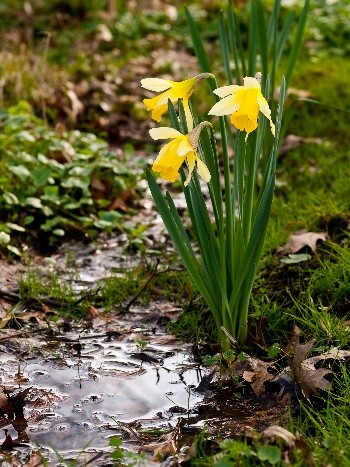
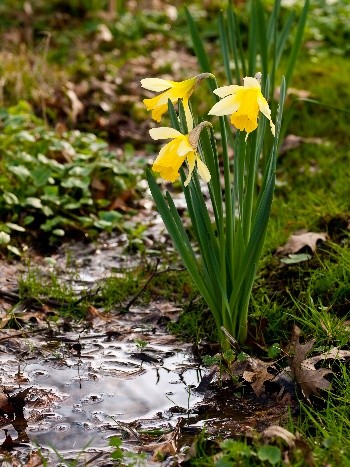
Have you spotted any signs of spring yet?
I am waiting patiently for my bulbs to bloom. I’m not an avid gardener, though I hope to be one day, but even I find myself looking for those first hints of new life. As winter slowly fades and Lent draws near with its call to pray, fast, and give alms, I’m reminded of St Teresa of Ávila’s beautiful insight: “A beginner must think of herself as one setting out to make a garden in which her Beloved Lord is to take His delight.” In her Spiritual Autobiography, she uses the analogy of watering a garden to describe our growth in prayer.
St Teresa reflects on four different ways to water a garden, each illuminating a stage of the spiritual life.
1. Drawing water from a well
The first method is to carry water from a well—hard, deliberate work that demands both effort and trust. The gardener must lower the bucket into the unknown, hoping to draw up something life-giving.
Similarly, when we begin to pray regularly, it can feel like strenuous labour. We need discipline to set aside time each day. We must learn to quiet the many distractions of modern life, no easy task when we carry the whole world in our pockets through our mobile phones. And above all, we learn to trust that God is present, even when we do not immediately sense Him.
2. Using a waterwheel
The second method is to build a waterwheel. This still requires human effort, but it is gentler work. Here the water moves toward the garden on its own, flowing from higher ground.
At this stage, prayer begins to settle. Our conversations with the Lord grow deeper, quieter, and more natural than before.
3. Receiving water from a stream
St Teresa then describes gardens nourished by a flowing stream or brook. The soil receives a generous soaking and no longer needs constant tending.
This represents a deepening surrender in prayer. We rely less on our own actions and become more open to God’s. The Lord takes the lead, and we learn to rest in His presence.
4. Being watered by rain
Finally, there is the rain, entirely beyond the gardener’s control. One can only entrust the garden to the heavens and trust that the rain will come.
This, St Teresa says, is the prayer of complete abandonment, the prayer of union. Just as a farmer trusts in the providence of rain, so we entrust ourselves wholly to God. It is a beautiful ideal, and one I hope to grow into. Yet I often find myself back at the beginning, wrestling with everyday distractions. I find myself longing for rain, something we rarely lack in this part of the world! As Lent approaches, you may already have chosen what to fast from, and our parishes will offer many opportunities to give alms. My invitation to you is this: consider how you might go deeper in prayer this season.
Let us tend the gardens of our souls, trusting that God will bring forth new life in His time.