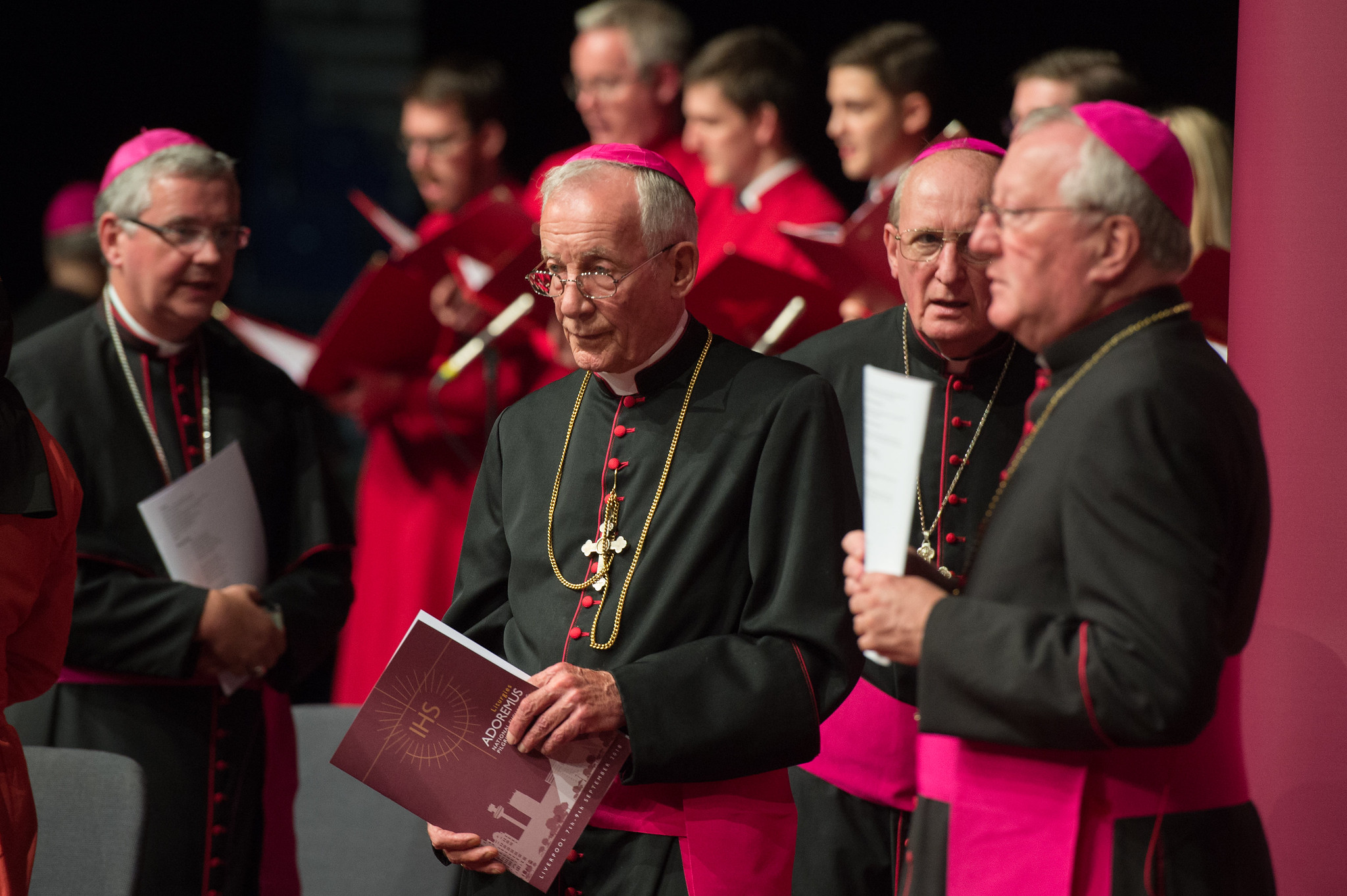
Bishop Terry joined the Catholic Bishops of England and Wales as they gathered at Hinsley Hall in the Diocese of Leeds for their autumn plenary meeting from November 10 to 13.
Statements were issued on assisted suicide and abortion and on environmental matters. A resolution was made on the Great Jubilee 2033.
One day was dedicated to updates and discussion on the work of the six departments of the Catholic Bishops’ Conference of England and Wales.
The bishops spent significant time discussing safeguarding and the vital work carried out to continually improve practices and procedures to ensure that every person who comes into contact with the Church is safe.
Work continues on two important aspects of the Church's mission, Synodality and its expression in the life of the Church in England and Wales, and the lay ministries of Lector, Acolyte and Catechist. Both were discussed at length and will be progressed in the coming months.
The bishops also met privately with the Apostolic Nuncio to Great Britain, His Excellency Archbishop Miguel Maury Buendía.
The next in-person plenary meeting will be a week-long retreat at the Venerable English College’s Villa Palazzola just outside Rome in April 2026.
Life Issues
The dignity and protection of human life was central to the bishops’ discussions during the week, particularly parliamentary moves to legalise assisted suicide and decriminalise abortion up to birth in some cases.
In a video interview, Archbishop John Sherrington, Archbishop of Liverpool and lead bishop for life issues, said: “Hope has not been lost, but 2025 is marked by an assault on human life, both at its beginning and at the end, and that's why the bishops have spent time focusing on the two bills in the House of Lords at the present time: the Terminally Ill Adults (End of Life) Bill and the Crime and Policing Bill.”
You can watch the interview with Archbishop Sherrington here
Environment
In a short post-plenary statement, the Bishops of England and Wales called on the government to support the Fossil Fuel Non-Proliferation Treaty campaign that were presented during the COP30 (30th UN Climate Change Agreement) negotiations in Belém, Brazil. They argue there is an urgent need for a binding commitment to end the expansion of new coal, oil and gas projects – and to accelerate a global transition away from fossil fuels.
Great Jubilee 2033
The bishops are planning several events in the lead up to this significant occasion, including the next National Eucharistic Congress, Adoremus, in London in October 2026.
Another key moment in the life of the Catholic Church will be the 200th anniversary of the Catholic Relief Act of 1829 that led to emancipation, which, Cardinal Nichols said, "enabled Catholics again to take our place in society, to be servants in society, and to play our part in the common good and social cohesion of society."
Updates from CAFOD and Missio
Presentations on the work of CAFOD and Missio were given by Christine Allen and Father Anthony Chantry respectively.
Director of CAFOD Christine Allen updated the bishops on CAFOD’s global workstreams, including in Zimbabwe which Bishop Stephen Wright of Hexham and Newcastle, chair of the Catholic aid and development charity, visited in October 2025. He later spoke to the bishops about his experiences and discusses them in this video.
Bishop Wright said: “It was a great privilege to see the CAFOD projects, they were truly inspiring. I had the joy of visiting three primary schools and a maternity unit. Jesus said we would find him in the poorest of the poor, and so we do.
“CAFOD speaks about nobody being beyond reach, and truly in that remote part of Zimbabwe, they are not beyond reach. What you can see is the love of the Lord being shared with others and, in those small steps, you can see the huge impact that it has on their lives.”
Prisons
Bishop Richard Moth, Bishop of Arundel and Brighton and lead bishop for prisons, praised the ongoing work of prison chaplains in the development of prisoners’ engagement with their faith. Ensuring prisoners have access to the chapel for prayer and worship has long been a priority for the bishops.
In a video interview recorded after plenary, Bishop Moth said: “We have our right to worship and so exercising that right to be able to attend Mass and other services in chapel is really important for those in prison. It's really important that time in chapel is recognised by the prison system as time well spent, as a valuable way of spending some of your time in the prison system.”
